

info@itectube.com
512.642.8823
Tube Bending Guide
Plain answers to the questions manufacturers ask when they add tube bending to production. The ITEC team wrote this guide from years of matching tube, pipe and profile benders to real parts. ITEC represents six manufacturers, so the advice starts with the part, not with one brand.
Start here
- Should you bring tube bending in-house? Run the break-even math before anything else.
- What to have ready before you ask for a quote. Gather the part data that decides the machine.
Getting Started
- Should You Bring Tube Bending In-House?
Bring bending in-house when outsourced parts cost more in price, lead time and control than owning a machine would. Here is how to run the math. - What Does a CNC Tube Bender Really Cost?
A production CNC tube bender runs roughly $80,000 to more than $500,000. Tooling, software, installation and training add to that. Here is the full picture. - What to Have Ready Before You Ask for a Tube Bender Quote
Bring part data, not just a tube size. This checklist covers the material, geometry, volumes and site details a supplier needs to match the right machine. - From Purchase Order to First Good Part
Plan a new tube bender as a project with seven stages, not a delivery date. Here is what happens in each stage and how to shorten it.
Choosing a Machine
- Rotary Draw, Roll or Freeform Bending?
Rotary draw suits most production parts. Roll bending suits large sweeping radii, and freeform suits parts with many or changing radii. - All-Electric or Hybrid Tube Bender?
All-electric benders win on repeatability, setup and running cost. Hybrid benders deliver high force for large, heavy-wall tube at a lower price. - Single Stack or Multistack Tube Bender?
A single stack holds one tool set. A multistack holds several, so it can bend more than one radius in a part and switch parts without a tooling change. - When Does a Twin-Head Tube Bender Make Sense?
A twin-head bender works on both ends of a tube at once. It pays off on long, symmetrical or two-ended parts made in high volume. - How to Bend Aluminum Profiles Without Distortion
Aluminum profiles distort when alloy, tooling and method are not matched to the shape. Support every thin wall and choose a method built for the section. - Running a Tube Bender With Fewer Skilled Operators
Move the skill into the machine, the program and the process. Stored setups, offline programming and automated loading cover work that once took years of experience.
Solving Bending Problems
- How to Control Springback in Tube Bending
Springback is the angle a tube gives back after bending. You cannot remove it, but you can predict it, overbend for it and correct it from measured parts. - How to Prevent Wrinkles in Tube Bending
Wrinkles form on the inside of a bend when the compressed wall has nowhere to go. A wiper die, a well-placed mandrel and matched tooling usually stop them. - How to Reduce Wall Thinning in Tube Bending
The outside of every bend stretches and thins. A larger radius, pressure die assist and low-drag tooling keep thinning inside your specification. - How to Stop Ovality and Flattening in Bent Tube
Ovality is the tube going out of round in the bend. A correctly sized and placed mandrel, close-fitting tooling and a suitable radius keep it round. - How to Cut Tube Bender Setup Time
Most setup time goes into changing and adjusting tooling. Stored settings, standard tooling, offline prep and multistack heads cut it sharply.
Software and Automation
- From SOLIDWORKS Tube Design to Bend Data
A CNC bender needs feed, rotation and bend angle for every bend, not a 3D model. Software can pull that data straight from SOLIDWORKS along with cut lengths and drawings. - When to Automate With a Robotic Bending Cell
Automate when steady volumes on repeat parts are limited by labor, not machine speed. Start with loading and unloading, then add robots once parts are proven.
More from ITEC
- How to choose a tube bender. Set capacity, capabilities, performance and price to find your Best-Fit Bender.
- Tube bending sucks. The challenges every bending shop runs into.
- ITEC at a Glance. Who we are and the six manufacturers we represent.
- Section 179 and payment calculator. Estimate tax savings and a monthly payment.
Ask the people who wrote it
Every article here comes from conversations with real manufacturers. If your question is not answered yet, ask us. Book an introductory meeting. Experience Matters.
Yeah, we said it.
Tube bending sucks.
Springback, wrinkles, wall thinning, ovality, setup time and operator skill. Every shop fights them, and every new part brings more. ITEC has spent decades matching tube, pipe and profile benders to real parts. Bring us yours and we will help you bend it right.
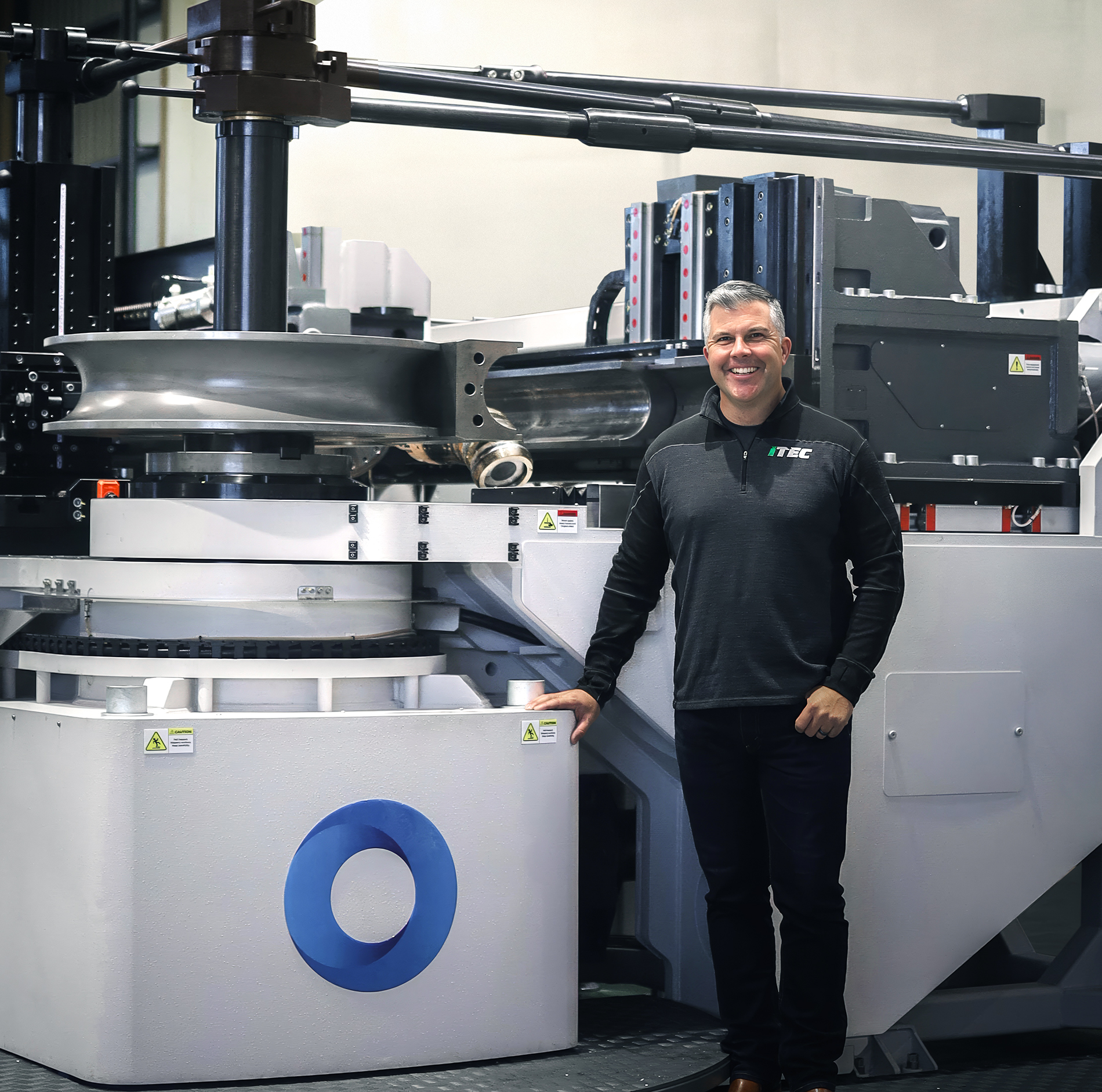
Brian JulienPresident, ITEC
See the full list of challenges
Experience Matters.