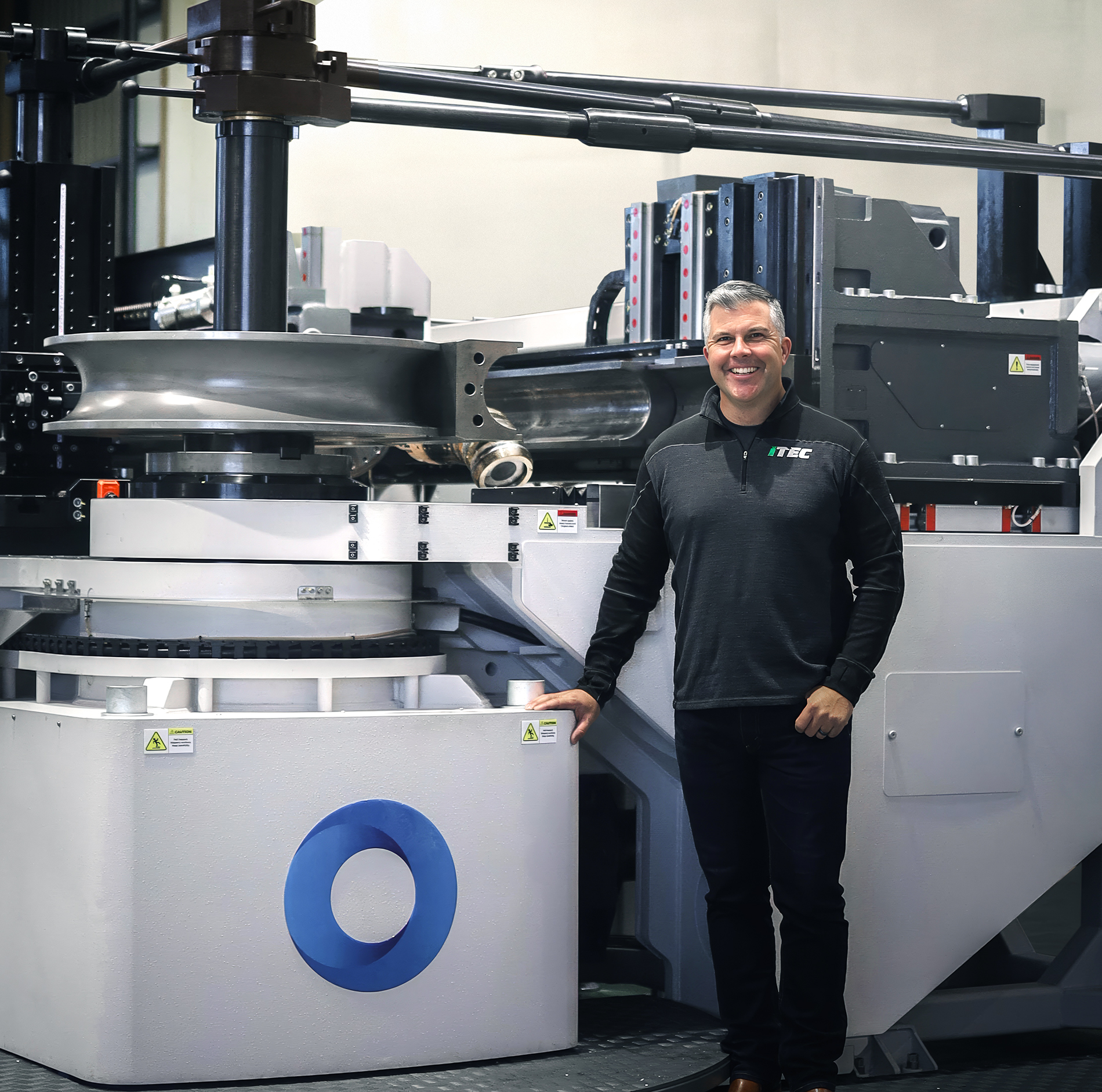
Choose an all-electric bender when repeatability, fast setup and low running cost matter most. Choose a hybrid when you bend large, heavy-wall tube and need high force at a lower purchase price. Fully hydraulic CNC rotary draw benders have largely disappeared, so today the terms hydraulic and hybrid mean much the same thing (The Fabricator).
What the terms mean
A hybrid bender moves some axes with electric servo motors and others with hydraulic pressure, often the clamp, the pressure die and the mandrel. An all-electric bender drops the hydraulic system and drives every axis with an electric servo (The Fabricator).
Side by side
| Factor | All-electric | Hybrid |
|---|---|---|
| Purchase price | Usually higher | Usually lower |
| Running cost | Lower. Power is drawn only when the machine moves | Higher. The pump runs to hold pressure even when idle |
| Repeatability | Very consistent, since every axis is servo controlled | Good, though results can shift as the oil warms up |
| Setup | Fast. Settings are stored in the program | Slower, with more manual adjustment |
| Force for large, heavy-wall tube | Available on larger models, at a higher price | High force at a lower price |
| Maintenance | No hydraulic oil, hoses or leaks | Oil, filters and seals to maintain |
| Shop environment | Quieter, with little heat | Louder, with more heat |
Why all-electric is gaining ground
An all-electric bender uses power only when it moves, while a hydraulic system makes pressure, noise and heat whether it is bending or idling (The Fabricator). Without oil warm-up, parts do not drift during the first hour of a shift.
Setup is the other big gain. Assuming no tooling problems, a new part can be set up on an all-electric bender in 30 minutes or less, and operators use no hand tools to adjust it (The Fabricator). That matters most to shops that run many part numbers in small batches.
All-electric benders often cost more to buy but less to run (The Fabricator). Compare them on cost of ownership over the life of the machine, not purchase price alone.
When hybrid is the better fit
- You bend large diameter or heavy-wall tube and pipe most of the time.
- Your runs are long and changeovers are rare.
- Purchase price is the deciding factor.
- Your team already knows hydraulic machines well.
When all-electric is the better fit
- Tolerances are tight and parts must repeat across shifts and batches.
- You run many part numbers and change over often.
- Skilled operators are hard to find.
- Energy cost, noise or a clean shop floor matter.
Common questions
Are all-electric benders strong enough for large pipe?
Increasingly, yes. All-electric machines now handle larger diameters and heavier walls than they once did. At the very top of the size range, hybrid machines still offer high force for less money. Compare both for your largest part.
Is a hybrid bender outdated?
No. Hybrids remain a sound choice for heavy work and tight budgets. The right answer depends on your parts, your volumes and your people.
Do the two types use different tooling?
The tooling principles are the same. Mounts and dimensions vary by builder, so check whether existing tooling will fit before you buy (The Fabricator).
Compare both with ITEC
ITEC represents both types. Herber and Dynobend build fully electric machines. AMOB builds everything from simple hydraulic to fully electric multistack. Star Technology combines electric, pneumatic and hydraulic motion in one machine. We can quote both for the same part so you can see the difference in numbers. Book an introductory meeting.