Plan the time from purchase order to first good part as a project with seven stages, not a single delivery date. Lead times vary widely by brand, model and options. Ask every supplier for a written date for each stage, and run the stages on your side in parallel where you can.
The seven stages
| Stage | What happens | What drives the time |
|---|---|---|
| 1. Application review | The supplier studies your parts and recommends a machine | How complete your part data is |
| 2. Quote and order | You compare quotes, settle options and place the order | Internal approvals and financing |
| 3. Machine build | The builder makes or configures the machine | Whether the model is in stock or built to order, and how custom it is |
| 4. Tooling | Tooling is designed, approved and made for each tube size and radius | How fast you approve tooling drawings |
| 5. Site preparation | Floor space, power, compressed air and, for large machines, a foundation | Your facilities team and contractors |
| 6. Delivery and installation | Shipping, rigging, setting the machine in place and connecting it | Machine size, transport permits and site access |
| 7. Commissioning and training | The machine is tested, operators are trained and first parts are approved | Part complexity and how ready your team and material are |
How to shorten it
- Send complete part data early. The quote checklist covers what to gather.
- Approve tooling drawings quickly. Tooling often sets the real start date, not the machine.
- Prepare the site while the machine is built. Power, air and floor work can all happen in parallel.
- Program parts before the machine arrives. Offline programming from CAD lets you run first parts on day one.
- Have production material on hand. Run-off parts should come from the same material you will use in production.
- Name the people who will run it. Operators who join installation learn faster than those trained later.
What fast looks like
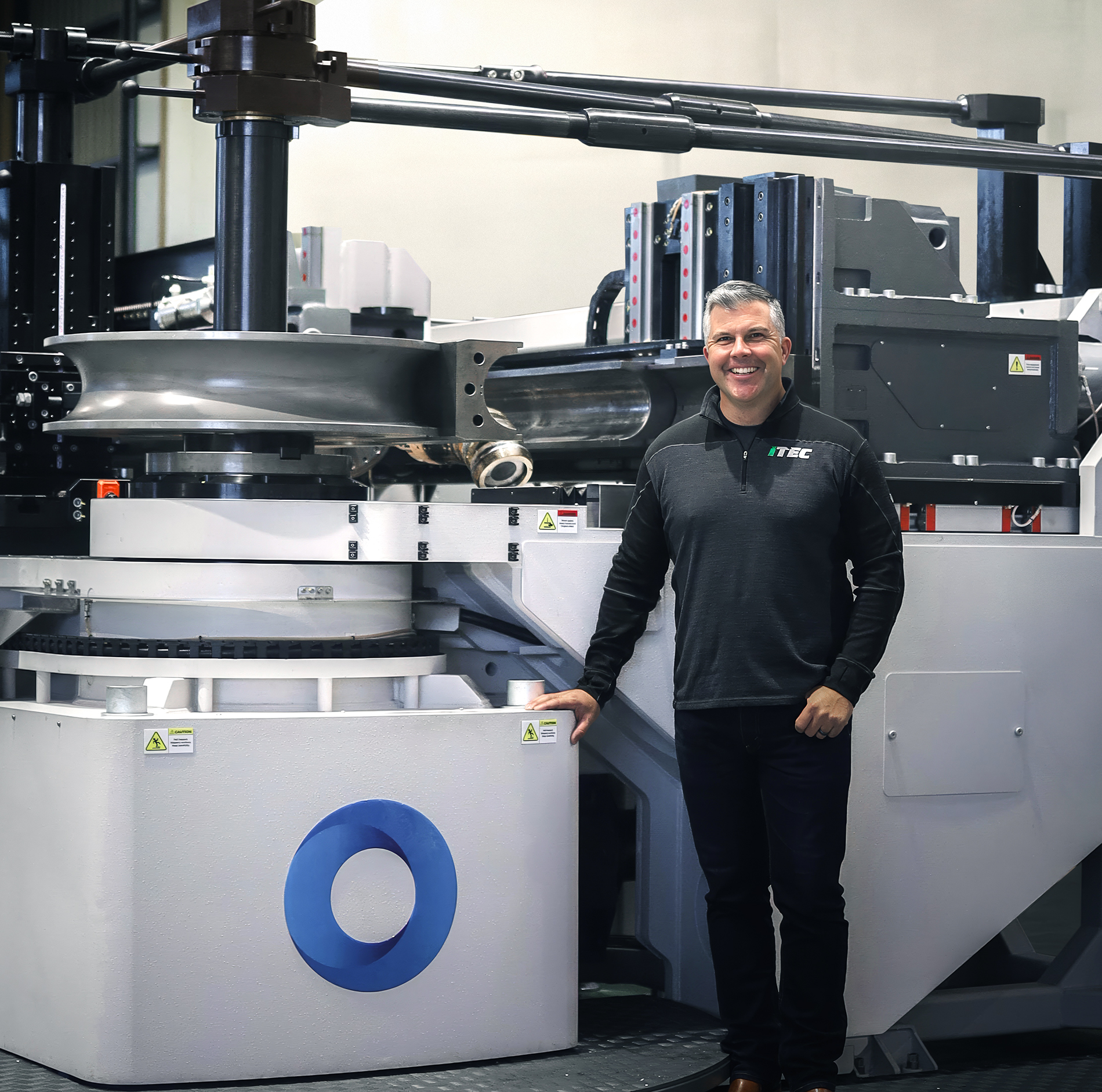
When a machine is available and the customer is ready, the timeline can be very short. In one ITEC project, a machine weighing more than 66,000 pounds was delivered, installed and running within two weeks. That included transport permits, tooling and operator training (ITEC case studies).
Built-to-order machines take longer. The stages stay the same, so the planning habits above still apply.
Common questions
What is a run-off?
A run-off is the test where the machine bends your actual parts and you confirm they meet your drawings. Agree on which parts, how many and what tolerances before the machine ships.
What should be ready on the day the machine arrives?
Have power at the machine location, compressed air if it is needed, a clear path for rigging and a lift or crane if required. Have tube stock on hand and the operators who will be trained.
Can we keep outsourcing during the changeover?
Yes, and you should. Keep your supplier running until in-house parts pass your quality checks, then move part families over one at a time.
Plan it with ITEC
ITEC coordinates every stage, from application review through training and support after the sale. Book an introductory meeting to build a timeline around your parts.