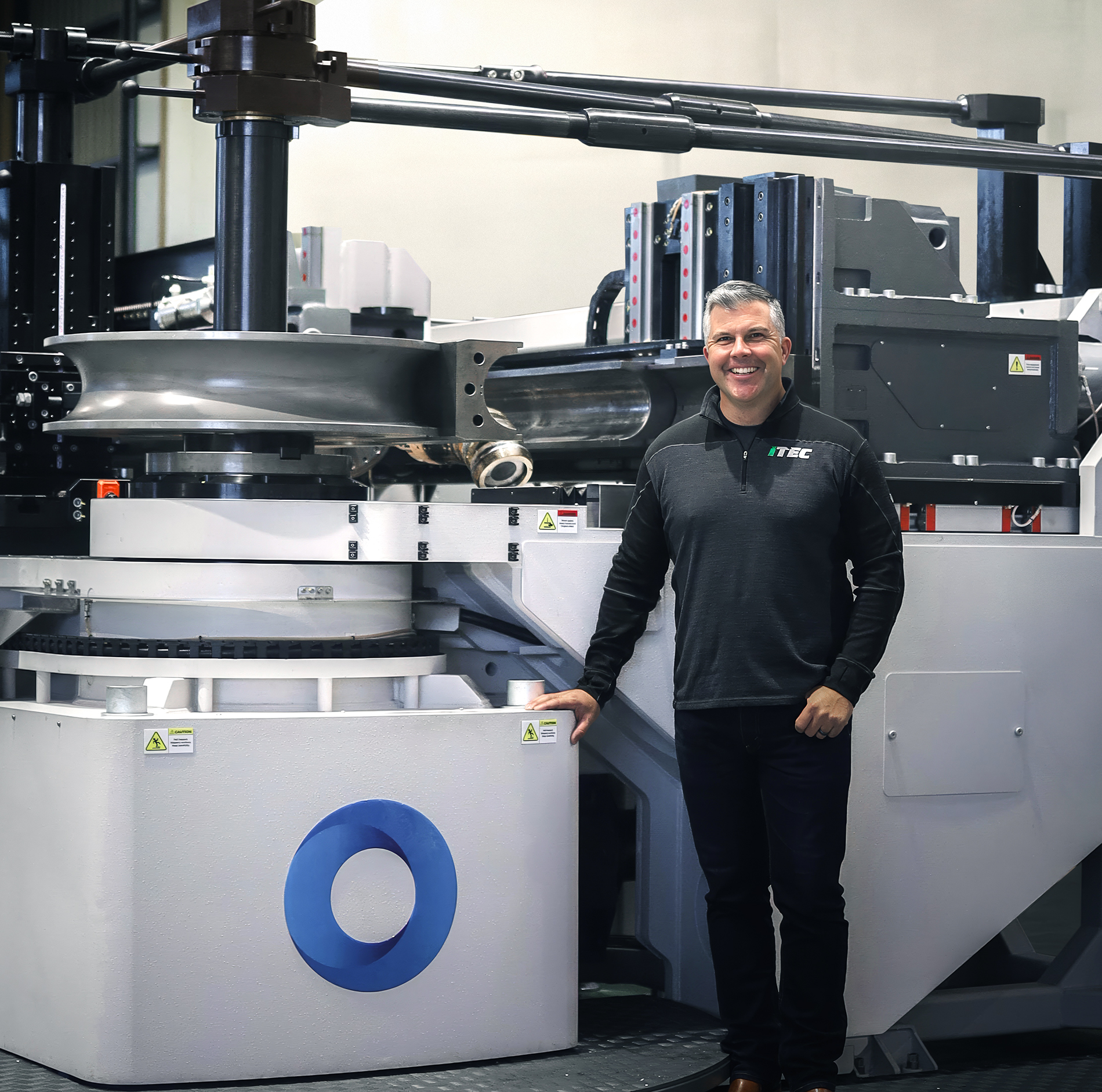
Wall thinning happens on the outside of a bend, where the tube stretches. You reduce it with a larger radius where the design allows, pressure die assist that pushes material into the bend, and tooling that supports the tube without dragging on it.
Why the wall thins
As the tube is drawn around the bend die, the wall thickens along the inside of the bend and thins along the outside (The Fabricator). Some thinning happens on every bend. It becomes a problem when it passes the limit in your part specification, which many industries set for pressure lines, structural parts and safety parts.
What drives thinning
| Factor | Effect | Trade-off when you change it |
|---|---|---|
| Tighter radius | More stretch and more thinning | A larger radius thins less but takes more space in the design |
| Thinner starting wall | Less material to give before the limit | A heavier wall costs more and weighs more |
| Drag from the mandrel or pressure die | Holds the tube back, so the outside stretches more | Less drag needs careful tooling setup and the right lubricant |
| Pressure die assist | Pushes material into the bend, so the outside stretches less | Too much assist can cause wrinkles on the inside |
| Material ductility | Less ductile material thins faster and can crack | A different grade or temper may change other properties |
How to reduce it
- Use the largest radius the design allows. Talk with design engineering before tooling is ordered.
- Use pressure die assist. It pushes the tube forward as it bends instead of letting the bend die pull it.
- Cut drag. Set the pressure die with just enough force to hold the tube, since too much drag also causes slipping (The Fabricator). Lubricate the mandrel correctly.
- Position the mandrel carefully. It should support the wall through the bend without scraping it.
- Consider the starting wall. Sometimes a slightly heavier wall is the cheapest fix.
How to measure it
Bend sample parts and check the wall on the outside of each bend with an ultrasonic thickness gauge. For a first article, cut a sample through the bend and measure the section directly. Compare the thinnest point with the starting wall to get the percentage of thinning.
Common questions
How much wall thinning is acceptable?
It depends on your industry and your part. Check the specification that governs the part before you choose a radius. If none exists, agree on a limit with your customer.
Why is the inside of the bend thicker?
The inside of the bend is compressed while the outside is stretched. Material moves from one side toward the other. That is also why the inside can wrinkle.
Does all-electric bending reduce thinning?
Not by itself. Precise control of pressure die assist and axis speeds helps, but radius, wall and tooling setup matter most.
Solve it with ITEC
ITEC can review your radius, wall and specification together and recommend the tooling and machine features that keep thinning in limits. Book an introductory meeting.